How to Clean Cast Iron Casserole Dish for Lasting Shine

Keeping your cast iron casserole dish clean is about more than looks. It makes food taste better and helps the pan last for decades. If you’ve worried about rust, stuck-on food, or losing that black, nonstick seasoning, I get it. Many people avoid cast iron because cleaning seems hard. In my experience, it only takes a bit of know-how and the right tools to make cleaning simple and even satisfying.
This guide shows you how to clean a cast iron casserole dish step by step. I’ll also cover what to avoid and how to handle tough problems like rust, sticky residue, or gummy seasoning. You’ll find practical tips for daily care and product ideas that save time.
Whether you’re new to cast iron or you’ve used it for years, this article gives you the clear, confident routine you need to care for your casserole dish.
Why Cleaning Cast Iron Is Different
Cast iron is not the same as stainless steel or ceramic. It has a seasoned surface, a thin layer of baked-on oil. This layer protects the metal and creates a natural nonstick finish. Keep the seasoning intact and the pan works better. Damage the seasoning and the pan will stick and rust.
You should never put cast iron in the dishwasher, let it soak for hours, or use harsh cleaners that strip oil. Those habits will remove seasoning and expose bare metal to rust. Cleaning cast iron is about removing food and germs while protecting that baked-on oil.
Many cooks think cast iron is fragile or high-maintenance. It’s actually one of the toughest cookware materials when treated right. A little care makes a cast iron casserole dish last a lifetime.
Essential Tools And Products For Cleaning
Before you clean, gather a few simple tools. You don’t need special gear, but the right items will save time and protect the seasoning.
- Soft-bristle brush or non-scratch scrubber: Removes food without scuffing the seasoning.
- Plastic scraper: Lifts stuck bits safely.
- Coarse salt: Acts as a gentle abrasive for tough spots.
- Paper towels or lint-free cloth: For drying and applying oil.
- Cooking oil: To maintain and touch up seasoning.
- Mild dish soap (optional): Safe in small amounts for everyday cleaning.
- Chainmail scrubber: Great for heavy-duty cleaning without harming seasoning.
If you want purpose-built tools, I recommend the Lodge Pan Scraper and the Lodge Chainmail Scrubber. Both are easy to find on Amazon and are designed for cast iron care.
Why each tool matters
A soft brush clears crumbs and grease. A plastic scraper removes baked-on food. Coarse salt gives you controlled abrasion without chemicals. Chainmail is tougher on crusts but won’t sand away seasoning like steel wool. Oil and cloth finish the job by protecting the metal.
Step-by-step: How To Clean A Cast Iron Casserole Dish
Cleaning your cast iron casserole dish is straightforward if you follow these steps. Remember: the goal is to remove food, not the seasoning.
Step 1: Let The Dish Cool Slightly
After cooking, let the dish cool for 10–15 minutes. Cleaning when it’s too hot is unsafe. But don’t wait until it’s cold. Warm cast iron loosens food and is much easier to clean.
Step 2: Remove Leftover Food
Use a soft brush or a plastic scraper to take away loose bits. Avoid metal utensils that can scratch the seasoning.
If food is stuck, pour in a small amount of hot water (never cold; sudden temperature change can cause damage). Let it sit for a minute. Then scrub gently with your brush or scraper.
Step 3: Wash With Minimal Soap
Rinse with warm water. If you want, use a small amount of mild dish soap. Modern dish soaps are mild and won’t strip an established seasoning. Use soap sparingly and rinse well.
Do not soak the dish for long periods. Prolonged soaking increases the risk of rust.
Step 4: Scrub With Salt For Tough Messes
For stubborn residue, sprinkle a tablespoon of coarse salt into the pan. Use a paper towel or brush to scrub. The salt acts as a safe abrasive and helps lift stubborn bits without harming the seasoned surface.
Step 5: Rinse And Dry Thoroughly
Rinse away salt and debris. Dry the dish immediately with a towel. Cast iron rusts fast if left wet.
For extra safety, put the dish on a warm burner or in a low oven for a few minutes to evaporate any remaining moisture.
Step 6: Apply A Thin Layer Of Oil
While the pan is still warm, add a few drops of cooking oil (vegetable, canola, grapeseed, or flaxseed work). Wipe the oil around with a paper towel. The surface should look shiny but not greasy.
This top-up keeps the seasoning strong and prevents rust between uses.
Step 7: Store Properly
Store your cast iron casserole in a dry place. Keep it uncovered or place a paper towel between the lid and the pot to allow air flow. Good airflow prevents trapped moisture and mold.
Quick Routine: a 60‑second clean
When you’re short on time: wipe out food, rinse with hot water, scrub with salt if needed, dry well, and rub a thin layer of oil. This quick routine keeps the seasoning healthy between deeper cleans.
What Not To Do When Cleaning Cast Iron
Many common mistakes can damage your cast iron casserole dish. Avoid these:
- Don’t use the dishwasher. Harsh detergents and prolonged water exposure strip seasoning and invite rust.
- Never soak cast iron for hours. Water causes rust fast.
- Avoid metal scouring pads for regular cleaning. They can remove seasoning.
- Don’t store pans with water or food inside.
- Don’t use harsh chemicals or oven cleaners on seasoned cast iron.
A little care prevents most problems and keeps your pan cooking and looking great.
Dealing With Common Cast Iron Cleaning Problems
Even with good habits you may run into issues. Here’s how I handle the most common problems, fast and reliably.
Stuck-on Food
If you have stubborn, baked-on food:
- Fill the dish with water and bring it to a gentle boil on the stove.
- Use a wooden spoon or plastic scraper to loosen the debris.
- Pour out the water and clean as usual.
- Repeat the salt scrub if needed.
Rust
Rust often appears when cast iron is left wet or unseasoned. To remove rust:
- Scrub the rusty area with steel wool or a chainmail scrubber until the rust is gone.
- Rinse and dry thoroughly.
- Apply a thin layer of oil to all surfaces.
- Bake the dish upside down in the oven at 375°F (190°C) for one hour. Put foil below to catch drips.
Heavy rust may require repeating this process. If deep pitting is present, the pan may need more intense restoration.
Sticky Or Gummy Surface
Sticky seasoning usually means too much oil was used or it wasn’t heated enough to polymerize. To fix sticky areas:
- Wash the sticky spot with hot water and mild soap.
- Dry completely.
- Re-season: apply a thin layer of oil and bake in the oven.
Smelly Or Rancid Odors
Bad smells come from old oil or food residue. To remove odors:
- Wash with hot water and a little baking soda to neutralize odor.
- Rinse, dry, and re-season.
White Spots Or Flaking
White spots or flaking mean the seasoning is breaking down or uneven. Scrub gently to remove loose bits, rinse, dry, and re-season. If flakes persist, strip the pan and rebuild a smooth seasoning layer.
How To Restore An Old Or Neglected Cast Iron Casserole Dish
Found a rusty thrift-store casserole or a forgotten pan in the attic? You can often restore it to cooking condition. I’ve done this many times. Here’s a reliable method:
- Scrub off rust and debris with steel wool or a chainmail scrubber.
- Wash with hot water and a little soap to remove oils and grime.
- Dry completely—heat it if needed.
- Coat all surfaces with a thin layer of oil.
- Bake upside down in the oven at 375°F (190°C) for one hour. Use foil on the rack below.
- Cool, check the finish, and repeat oiling and baking until the surface is smooth and dark.
Restoring can take several rounds. When done, the pan will perform like new unless it has a crack or severe pitting.
Credit: www.independent.co.uk
How To Maintain Seasoning And Prevent Problems
The best way to avoid cleaning headaches is to keep your cast iron seasoning healthy. Here’s what I do:
- Use the casserole often. Cooking with a little oil helps build seasoning naturally.
- Always dry the pan fully and apply a thin coat of oil after cleaning.
- Avoid very long cooks with acidic foods (tomatoes, vinegar) that can erode seasoning.
- Don’t over-oil: Excess oil can turn gummy instead of forming hard seasoning.
- If you see dull or gray spots, rub a little oil on them and heat to refresh the surface.
A well-seasoned dish becomes almost nonstick and much easier to care for over time.
Comparing Cast Iron To Other Materials
People often ask how cast iron stacks up against stainless steel, enameled cast iron, or ceramic. Here’s a clear comparison to help you choose:
| Material | Cleaning Difficulty | Rust Risk | Dishwasher Safe | Durability |
|---|---|---|---|---|
| Cast Iron | Medium | High (if not cared for) | No | Very High |
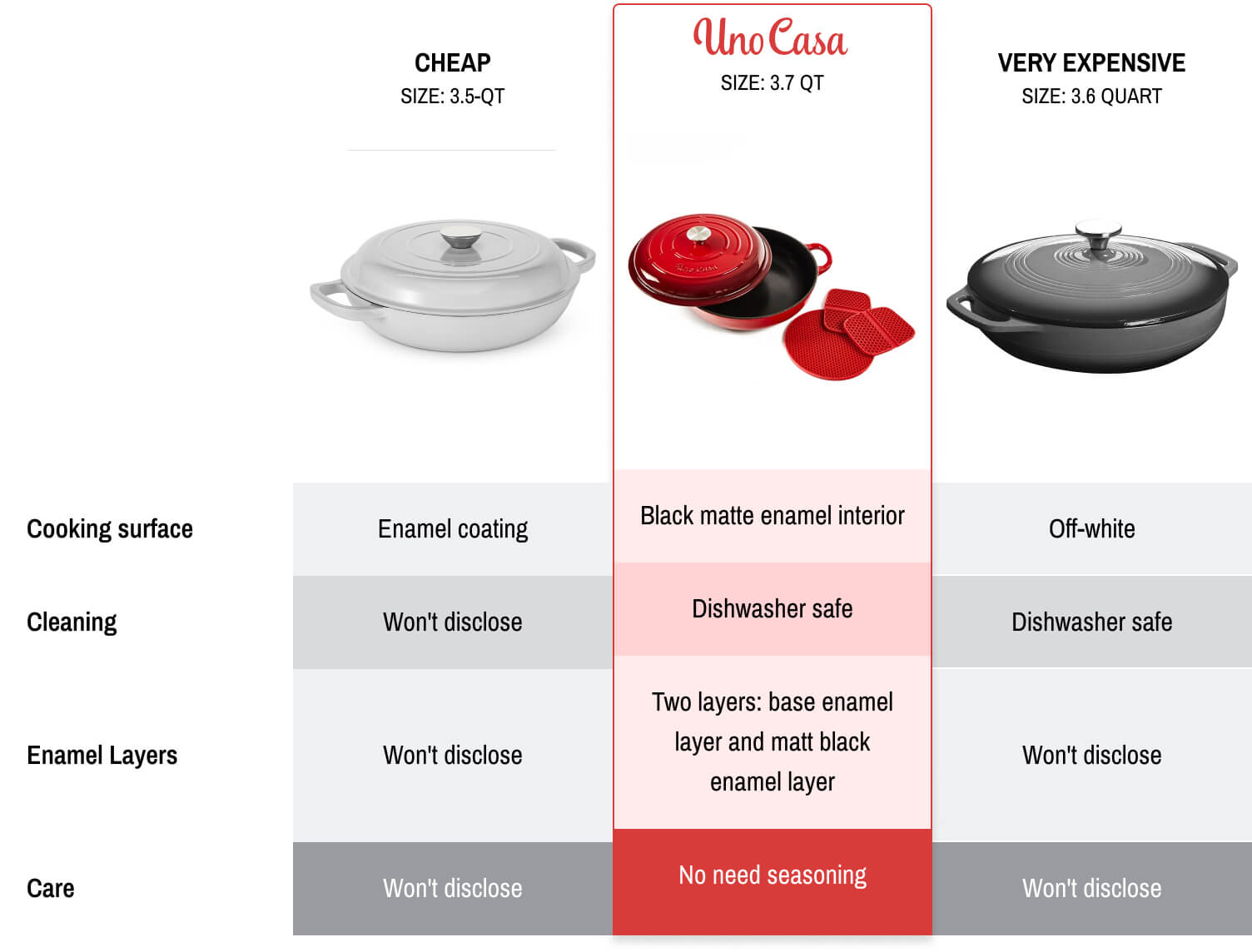
| Enameled Cast Iron | Easy | Low | Sometimes | High |
| Stainless Steel | Easy | Low | Yes | High |
| Ceramic | Easy | Low | Yes | Medium |
Cast iron needs a bit more care. In return, it gives superior heat retention, great browning, and flavor development that many cooks prefer.
Best Oils For Seasoning Cast Iron
Not all oils work the same for seasoning. Here’s a simple guide:
| Oil Type | Smoke Point (°F) | Flavor Impact | Availability |
|---|---|---|---|
| Flaxseed Oil | 225 | Neutral | Medium |
| Canola Oil | 400 | Neutral | High |
| Vegetable Oil | 400 | Neutral | High |
| Grapeseed Oil | 420 | Neutral | Medium |
| Olive Oil | 375 | Mild | High |
Canola and vegetable oil are easy, cheap, and work well. Flaxseed oil is often recommended for a hard, durable finish, but it costs more and can flake if overapplied. I use canola for routine seasoning and save flaxseed for a full rebuild when I want a very hard layer.
Choosing The Right Cleaning Tools For Your Needs
Many cleaning tools exist. Pick ones that protect seasoning while removing food. Here’s what I suggest:
- Soft-bristle brush: Ideal for everyday cleaning and gentle on seasoning.
- Chainmail scrubber: Excellent for crusty residue; it cleans without stripping seasoning.
- Plastic scraper: Perfect for lifting stuck bits safely.
- Steel wool: Use only to remove heavy rust or to strip old layers before re-seasoning.
- Non-scratch sponge: Good for light cleaning.
The Lodge Chainmail Scrubber is a dependable tool many of us use. It’s available on Amazon and works well on both seasoned and enameled surfaces.

Credit: www.walmart.com
Tips For Everyday Cast Iron Care
Keeping your cast iron casserole dish in top shape doesn’t take much. Here are practical tips I use all the time:
- Clean after every use. Even a quick wipe stops buildup.
- Never add cold water to a hot pan to avoid thermal shock.
- Dry with a towel, then heat briefly to remove hidden moisture.
- Apply oil while the pan is warm for better absorption.
- Store in a dry place to prevent rust.
- When stacking pans, place a soft cloth or paper towel between them.
- If rust appears, act quickly: clean and re-season to stop it from spreading.
These small habits make a big difference in longevity and performance.
Common Myths About Cleaning Cast Iron
There’s a lot of confusion about cast iron care. Let me clear up some common myths:
- Myth: Never use soap. Reality: Small amounts of mild soap are fine and won’t ruin good seasoning.
- Myth: You need to season after every use. Reality: A light oiling is enough unless the surface looks dull or damaged.
- Myth: Cast iron is nonstick out of the box. Reality: It takes time and repeated use to build a great nonstick surface.
- Myth: Rust means the dish is ruined. Reality: Most rust is easy to remove and reversible.
- Myth: Only animal fat can be used for seasoning. Reality: Many plant oils work well.
Knowing the facts helps you use and care for cast iron with confidence.
Credit: unocasa.com
Environmental Impact: Is Cast Iron A Green Choice?
Caring for cast iron is good for the planet. Unlike many nonstick pans, cast iron can last for decades or even centuries. That reduces waste and the need to replace cookware frequently.
Cast iron uses no synthetic coatings. Maintenance requires only simple, low-impact materials like salt, oil, and water. That makes it a very eco-friendly cookware option. For more, see the Cast Iron Cookware Wikipedia page.
When To Re-season Your Cast Iron Casserole Dish
Even with good care, you’ll sometimes need a full re-seasoning. Look for these signs:
- Dull or gray spots
- Food sticks more than usual
- Rust appears
- Surface feels rough or uneven
To re-season:
- Clean and dry the dish completely.
- Apply a thin coat of oil to all surfaces.
- Bake upside down at 375°F (190°C) for one hour.
- Let cool in the oven.
Repeat the process until the surface is smooth and dark. Full seasoning rebuilds the protective layer and improves nonstick performance.
Product Recommendations For Cleaning Cast Iron
Right tools and oils speed up maintenance. Here are three products I trust for cleaning and seasoning a cast iron casserole dish. All are widely available on Amazon:
- Lodge Pan Scraper: Removes stubborn food without scratching the pan.
- Lodge Chainmail Scrubber: Stainless steel rings that clean well while preserving seasoning.
- John Boos Mystery Oil: A food-safe oil good for maintaining and seasoning cast iron.
These items are reliable and used by many home cooks to make cast iron care easier.
Troubleshooting Guide: Quick Solutions To Common Issues
Here’s a handy reference for quick fixes:
| Problem | Cause | Solution |
|---|---|---|
| Rust spots | Left wet, poor drying | Scrub off, dry, oil, heat |
| Sticky surface | Too much oil, low heat | Wash, dry, re-season |
| Food sticks | Weak seasoning | Oil and heat, repeat use |
| Strange odor | Old food/oil residue | Wash, baking soda, re-oil |
| Flaking surface | Over-seasoning, old layers | Scrub, re-season lightly |
Frequently Asked Questions
How Often Should I Clean My Cast Iron Casserole Dish?
Clean your cast iron casserole dish after every use. Even small amounts of oil and food can build up and harm the seasoning. Quick cleaning after cooking keeps the dish ready and prevents bigger problems.
Can I Use Soap To Clean Cast Iron?
Yes. A small amount of mild dish soap is fine. Modern soaps are gentle and won’t ruin established seasoning. Rinse and dry immediately afterward.
What Should I Do If My Cast Iron Gets Rusty?
Don’t panic. Use a chainmail scrubber or steel wool to remove rust. Wash with warm water, dry thoroughly, and apply a thin oil layer. If rust is heavy, re-season the dish in the oven to rebuild protection.
Do I Need To Season After Every Cleaning?
No. You don’t need a full oven seasoning every time. Wiping the pan with a little oil while it’s warm is usually enough. Only do a full re-season when the surface looks dull, sticky, or rusty.
Is It Safe To Cook Acidic Foods In Cast Iron?
Short cooks with acidic foods (tomatoes, vinegar) are fine if your seasoning is strong. But long, slow cooks with acid can wear the seasoning. For long acidic recipes, consider using enameled cast iron or an alternative like stainless steel.
Caring for your cast iron casserole dish may seem intimidating at first. But once you follow a simple routine, it becomes second nature. With a few minutes of care after each use, your cast iron will reward you with better flavor, reliable heat, and a lifetime of service.