Is Nickel in Stainless Steel Cookware Safe? A Real Look at the Science

Hey there. I know why you are here.
You probably saw a video online. Or maybe you read a scary headline. It likely said your favorite shiny pans are leaching “heavy metals” into your food.
I have been there. I looked at my own kitchen rack and felt a knot in my stomach. I cook for my family every day. The last thing I want to do is hurt them.
So, I stopped guessing. I dug into the real research. I looked at metallurgy. I looked at medical studies. I wanted the cold, hard truth.
Is nickel in stainless steel cookware safe?
The short answer is: Yes, for most of us.
But it is not a simple “yes” or “no” for everyone. If you have a severe allergy, you need details. You need to know how it works.
Let’s break this down together. No jargon. Just facts.
Understanding Nickel in Stainless Steel: The Science Behind the Concern
First, we need to know what your pan is actually made of.
Stainless steel is not just one metal. It is a mix. It is an alloy. Think of it like a recipe.
The main ingredient is iron. But iron rusts. It rusts fast. So, makers add chromium. Chromium fights rust.
But they also add nickel. Why?
Why Nickel Is Added to Stainless Steel Cookware
Nickel is not there to cut costs. In fact, nickel is expensive. It is there to make the pan better.
It Makes the Pan Tough Nickel changes the structure of the metal. It makes it harder. It helps the pan keep its shape when it gets hot.
It Creates a Shield This is the big one. Nickel helps form a “passive layer.” This is an invisible skin on the surface of the pan. This skin stops the metal from reacting with your food.
If you cook a tomato sauce, acid attacks the metal. Nickel helps that invisible shield hold strong. Without it, the pan might pit. It might rust. A rusty pan is not safe to cook in.
So, nickel is there to protect the food, not to hurt it.
Common Stainless Steel Grades and Their Nickel Content
Go look at the bottom of your best pot. Do you see numbers stamped there?
They usually look like fractions. These tell you the recipe of the metal. Here is how to read them.
18/10 (The Gold Standard) This is the most common type for good pans.
- The 18 is for Chromium (18%).
- The 10 is for Nickel (10%).
- Best Use: Boiling, searing, and everyday cooking. It is very shiny and fights rust well.
18/8 (The Standard) This is almost the same as 18/10.
- It has 8% nickel.
- It is still very safe and durable.
18/0 (The Nickel-Free Option) You might see this on cheaper pans or baking sheets.
- The 0 means zero nickel.
- The Trade-off: It is magnetic. It costs less. But it is not as tough. It can rust if you leave it wet. It does not have that extra protection against acid.
400-Series This is often used for mixing bowls or cheap cutlery. It has very little nickel. It is prone to corrosion over time.
The Real Risk: What Research Actually Shows About Nickel Leaching
Okay. Let’s get to the scary part.
Does nickel actually come out of the pan? Does it get into your food?
Yes. It does.
I am not going to lie to you. Metal is not magic. It reacts to heat. It reacts to food.
But context is everything.
If I tell you there is cyanide in apple seeds, you might panic. But you still eat apples. Why? Because the amount is tiny. It does not hurt you.
The same rule applies here. We need to look at the amount. We need to look at the real numbers.
Peer-Reviewed Studies on Nickel Migration from Cookware
Scientists have tested this. They did not guess. They boiled acid in pans and measured the liquid.
Here is what they found.
The European Food Safety Authority looked at this closely. They found that stainless steel does release nickel. But in most cases, the amount is very small.
It is usually far below the safety limit set by health experts.
Think about a single grain of sand. Now think about a whole beach. The amount of nickel from a pan is often like that single grain.
Also, your body can handle small amounts of nickel. In fact, you eat nickel every day. It is in the soil. It is in the water. It is in plants.
Most of us process it just fine. Our bodies flush it out.
Conditions That Increase Nickel Release
However, not all cooking is the same.
There is a “Triple Threat.” Three things make nickel leach more. If you avoid these, you cut the risk way down.
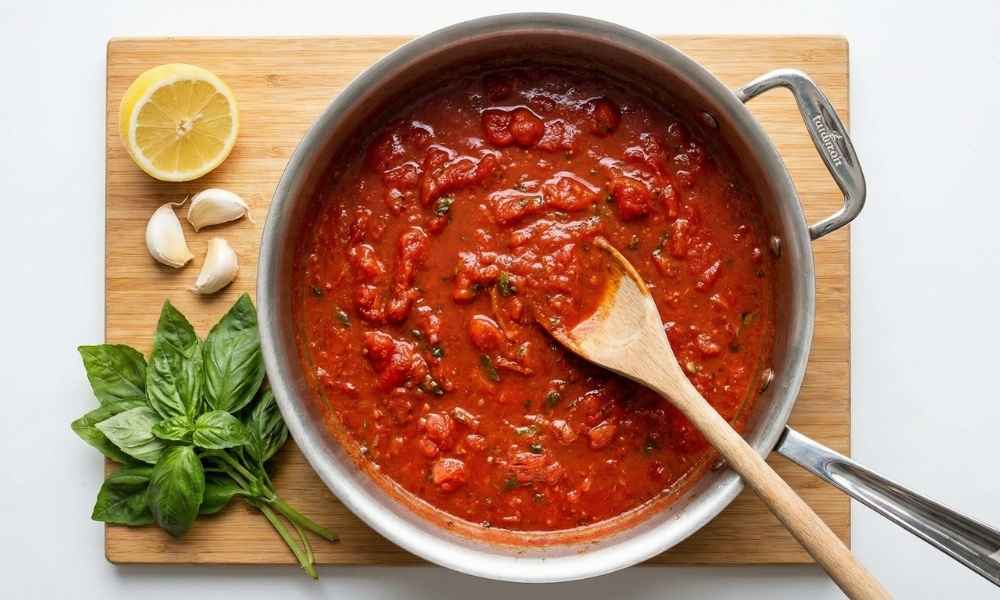
1. Acidic Foods Acids attack metal. Tomato sauce is the big one. Vinegar is another. Lemon juice, too. If you boil water, almost zero nickel comes out. If you simmer a spicy tomato sauce, more nickel comes out.
2. Long Cooking Times Time matters. A 15-minute sauté? Very safe. A 3-hour simmer? That gives the acid time to work on the metal.
3. The “New Pan” Effect This is a secret most people don’t know. Brand new pans leach the most. I learned this the hard way. When a pan is fresh from the factory, the surface is “active.” Studies show that after the first few uses, the leaching drops. It drops a lot. Old pans are actually safer than new ones. They have “settled in.”
Putting the Numbers in Perspective
Let’s look at your diet.
Do you like dark chocolate? Do you eat nuts? Do you like oatmeal?
These healthy foods are high in nickel. Plants pull nickel from the dirt.
- A serving of dark chocolate might have 10 times more nickel than what leaches from your pan during a normal meal.
- A handful of cashews has a lot of nickel.
For 99% of people, the nickel from the food is the main source. The nickel from the pan is just a tiny fraction. It is often less than 1% of your daily intake.
So, if you can eat a chocolate bar without a rash, your pan is likely not the problem.
Who Should Actually Be Concerned About Nickel in Cookware?
I just told you the risk is low. But low is not zero.
Some people do need to be careful. Are you one of them?
Let’s find out. We need to look at how your body reacts to metal.
Nickel Allergy vs. Nickel Sensitivity: Critical Distinctions
There are two main ways nickel affects people. They are very different.
1. The Skin Rash (Contact Allergy) This is common. Maybe 10% of people have it. You might know this feeling. You wear a cheap pair of earrings. Your ears get red and itchy. You wear a belt with a big metal buckle. You get a rash on your belly. This is a contact allergy. Your skin hates touching the metal. But here is the good news: Touching a pan is not the same as eating from it. Usually, handling the handle is safe if it is cool.
2. The Body Reaction (Systemic Allergy) This is rare. Very rare. Less than 1% of people have it. This is when eating nickel makes you sick. It is called SNAS. It might cause a rash all over your body. It might give you a headache. It might upset your stomach. If you have this, you have to watch your diet closely. You have to skip the chocolate. You have to skip the nuts. And yes, you might need to change your pans.
High-Risk Groups: A Quick Check
How do you know if you are at risk?
You don’t need to guess. Your body usually tells you.
Ask yourself these three simple questions:
- Question 1: Do cheap rings turn your finger green, red, or itchy?
- Question 2: Do you have eczema on your hands that won’t go away?
- Question 3: Do you feel sick or itchy after eating oatmeal, beans, or soy?
If you said “No” to all three: You are likely safe. You can probably cook with stainless steel without fear. Your body can handle it.
If you said “Yes” to any of them: You should be careful. You might want to talk to a doctor. A dermatologist can do a simple “patch test.” It puts a tiny bit of nickel on your back. If you react, you know for sure.
Why Most People Don’t Need to Worry
For the rest of us, our bodies are amazing machines.
We have built-in filters. Our kidneys work hard. They filter out the nickel we eat. They flush it away. It does not build up like lead or mercury does.
Also, remember that “shield” on the pan?
If your pan is in good shape, that shield works. It keeps the metal where it belongs. Unless you scrub it with harsh steel wool every day, that shield stays strong.
Practical Testing: What is in Your Kitchen?
You don’t need a lab coat to check your pans. You just need a magnet.
Go to your fridge. Grab a magnet. Now, hold it to the bottom of your stainless steel pan.
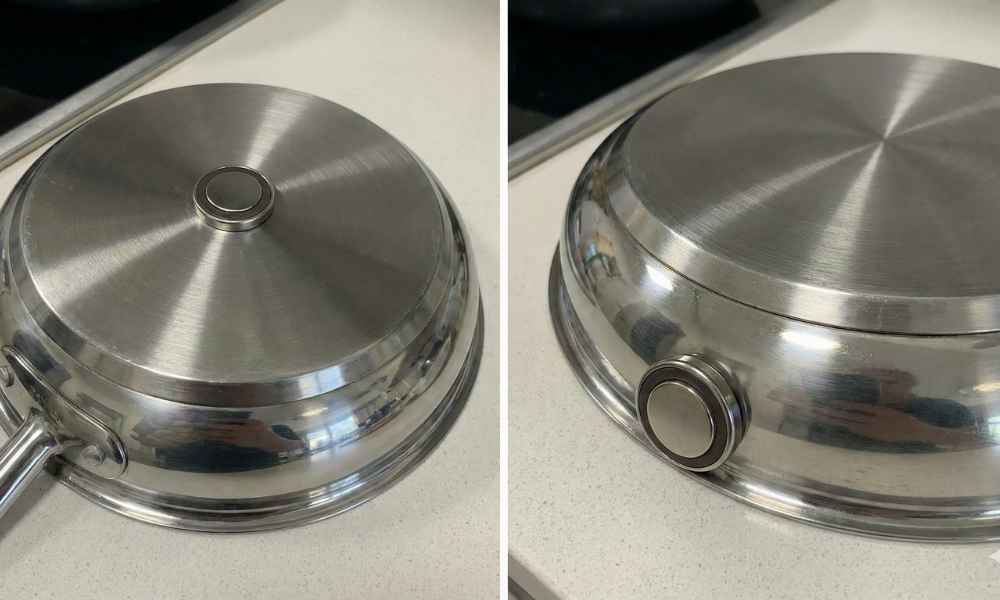
The Magnet Test: A Simple Trick
Does the magnet stick firmly? If it snaps on hard, your pan is likely 18/0 stainless steel.
- Good News: It has almost zero nickel.
- Bad News: It might rust faster. You need to dry it well.
Does the magnet fall off? If the magnet slides off or won’t stick, your pan is likely 18/10 or 18/8.
- Good News: It is very tough. It resists rust.
- Bad News: It contains nickel (about 10%).
Note: This test is not perfect. But it is a great “rule of thumb.” It gives you a quick answer.
The DMG Test (For the Super Careful)
Do you want to be 100% sure?
You can buy a kit online. It is called a DMG Spot Test. It costs about $15. It looks like a cotton swab. You rub it on the pan. If it turns pink? There is nickel on the surface. If it stays clear? You are safe.
Most people don’t need this. But if you have a severe allergy, it brings peace of mind.
Safer Cooking Practices: How to Minimize Risk
Let’s say you love your stainless steel pans. You don’t want to toss them.
I get it. They are expensive. They cook well.
You can still use them safely. You just need to change how you use them.
The “Break-In” Protocol for New Pans
Remember how I said new pans leach the most?
When you buy a brand new shiny pan, do this before you cook your first meal:
- Fill it up. Fill the pan with water.
- Add acid. Add a half-cup of white vinegar.
- Boil it. Let it boil for 10 to 15 minutes.
- Dump it. Pour that water down the sink. Do not use it.
- Repeat. Do this one more time.
This forces the loose nickel on the surface to release. It washes it away. Now, your pan is “seasoned.” It is much safer for your food.
The “Don’t Store It” Rule
This is a big mistake I used to make.
I would make a big pot of chili. Then, I would put the whole metal pot in the fridge overnight.
Do not do this.
The longer food sits in the metal, the more time the acid has to work.
- Cook in the pan.
- Move the food. Put leftovers in a glass container or a ceramic bowl.
- Wash the pan.
Your food will taste better. Your pan will last longer. And you will eat less nickel.
Watch the Scratches
Treat your pan gently. If you use a sharp knife inside the pan, you cut the “shield.” If you use harsh steel wool, you scrub the shield away.
The metal can heal itself. It just needs air. If you scratch it, wash it gently. Let it dry in the air. The oxygen helps rebuild that protective layer.
Alternative Cookware Options: A Balanced Look
Maybe you are still worried. That is okay. Peace of mind matters.
If you decide to switch, you have great options. But every pan has a trade-off. There is no “perfect” pan.
Here is the honest truth about the alternatives.
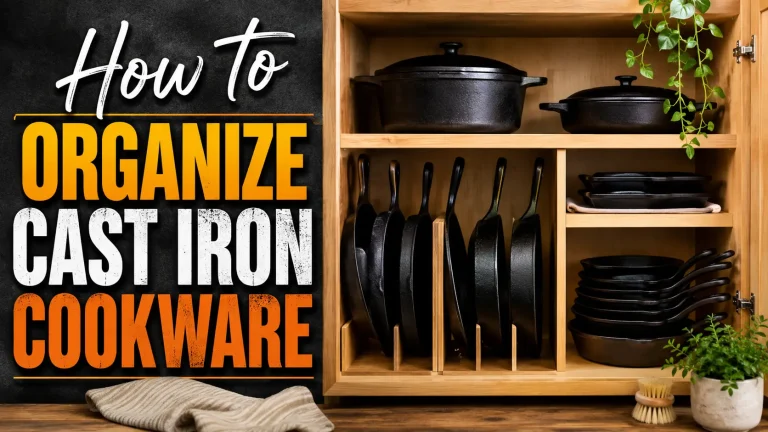
1. Cast Iron and Carbon Steel
These are the classics. They have zero nickel.
- The Good: They last forever. They add a tiny bit of iron to your food, which is usually good for you.
- The Bad: They are heavy. They need care. You have to “season” them with oil. You cannot put them in the dishwasher. If you leave them wet, they rust instantly.
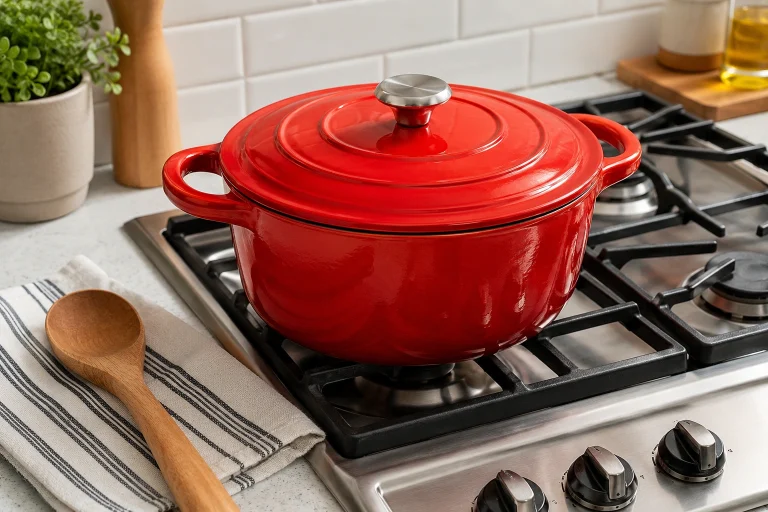
2. Ceramic and Enamel (Like Le Creuset)
This is metal covered in glass.
- The Good: The food only touches the glass. Glass is inert. It does not leach anything. It is great for slow-cooking tomato sauce.
- The Bad: They can chip. If the glass cracks, you have to throw the pan away. Also, they are often very heavy and expensive.
3. Titanium
This is the new player. It is very light.
- The Good: It is bio-compatible. Doctors use it for implants. It does not react with food at all.
- The Bad: It is very expensive. It does not hold heat as well as heavy steel.
Expert Perspectives: What Doctors Actually Say
I wanted to know what the medical pros think.
I looked at what dermatologists (skin doctors) and toxicologists (poison experts) tell their patients.
The Dermatologist’s View: “Contact is the key.” Most reactions happen on the skin. If you have a nickel allergy, wearing gloves while washing the pan helps more than changing the pan.
The Toxicologist’s View: “The dose makes the poison.” They remind us that our bodies are used to small amounts of metal. Unless you have a specific disease (like SNAS), the tiny amount from a pan is not enough to hurt your organs.
Making Your Decision: A Simple Plan
So, what should you do today?
Do not throw out your expensive set just yet. Use this simple checklist.
Scenario A: You Have a Confirmed Nickel Allergy
- Action: Switch to cast iron or glass for acidic foods.
- Why: Even a tiny rash is annoying. It is not worth the stress.
- Tip: You can still use stainless steel for boiling water or steaming veggies.
Scenario B: You Are Just Health-Conscious
- Action: Keep your pans.
- Change One Thing: Do not store food in the pan in the fridge.
- Change Another: Rotate your pans. Use enamel for your Sunday tomato sauce. Use stainless steel for your morning eggs.
Frequently Asked Questions
Can nickel leach from stainless steel cookware into food? Yes, it can. But the amount is very small. It happens mostly with new pans, long cooking times, and acidic foods like tomato sauce.
Is 18/10 stainless steel safe for nickel allergy? For most people, yes. 18/10 steel is very stable. But if you have a severe systemic allergy, you might want to use glass or ceramic cookware instead.
How do I know if my stainless steel has nickel? Use a magnet. If the magnet sticks firmly, it usually has no nickel (18/0). If the magnet falls off, it likely contains nickel (18/10 or 18/8).
Does boiling water in stainless steel release nickel? No. Water is not acidic. Boiling water is one of the safest things you can do in stainless steel.
Final Thoughts
Cooking should be a joy. It should not be a source of fear.
Is there nickel in your pan? Probably. Is it hurting you? Probably not.
Your body is strong. It handles the world well.
Make smart choices. Don’t store your chili in the pot. Rinse your new pans with vinegar.
Then, go back to enjoying your food.