How To Remove Stains From Cooktop: Easy Cleaning Tips

Most cooktop stains come off with the right cleaner, gentle scrubbing, and fast action.
A stained cooktop can make an otherwise clean kitchen look tired fast. The good news is that most marks are not permanent, and with the right method, you can remove grease, burnt-on food, water spots, and mineral stains without damaging the surface. I’ve cleaned everything from smooth glass tops to heavy-use gas grates, and the key is always the same: know your surface, use the mildest effective method first, and never rush the job.

Why Cooktop Stains Happen
Cooktop stains usually come from daily cooking messes that sit too long. Spilled sauces, boiled-over pasta water, oil splatter, and burned sugar can leave behind sticky or cloudy marks that get harder to remove over time.
Heat makes the mess set in faster. That is why a fresh spill may wipe away in seconds, while an old stain can feel like it has glued itself to the surface.
Common causes include:
- Grease buildup from frying and sautéing
- Burned food from boilovers or splatters
- Hard water spots from steam and cleaning sprays
- Discoloration from sugary spills
- Soap film from using too much cleaner on glass cooktops
The type of cooktop matters too. Glass, ceramic, stainless steel, and enamel all react differently, so the same method will not always work the same way. That is why learning how to remove stains from cooktop surfaces the right way can save you time and prevent scratches.
Know Your Cooktop Before You Clean
Before you start scrubbing, figure out what kind of cooktop you have. This matters more than people think. A cleaner that works fine on stainless steel can scratch glass, and a razor blade that helps on ceramic can damage softer surfaces if used carelessly.
Here is a simple guide:
- Glass or ceramic cooktops: Use nonabrasive cleaners and soft tools only
- Stainless steel cooktops: Use gentle degreasers and wipe with the grain
- Gas cooktops: Clean grates, caps, and burners separately
- Enamel-coated cooktops: Avoid strong scouring pads and harsh chemicals
I learned this the hard way once on a glass top. I used a rough sponge thinking I was saving time, and it left tiny marks that showed every time the light hit the surface. Since then, I always start soft and only step up if needed.
Best Way to Remove Stains from Cooktop Surfaces
The safest way to remove stains from cooktop surfaces is to work in stages. Start with warm water and soap, then move to a baking soda paste or a cooktop-safe cleaner if the stain stays put.
Here is a simple routine that works for many homes:
- Let the cooktop cool fully
- Remove loose crumbs and debris with a dry microfiber cloth
- Wipe with warm water and a few drops of dish soap
- For stubborn stains, apply a paste of baking soda and water
- Let it sit for 10 to 15 minutes
- Gently wipe with a soft cloth or non-scratch sponge
- Rinse and dry with a clean microfiber towel
For sticky grease, a small amount of white vinegar can help break the film. For heavy buildup, a cleaner made for your cooktop type may be the best option. The goal is not to attack the stain, but to loosen it little by little.
How to Remove Stains from Glass Cooktop
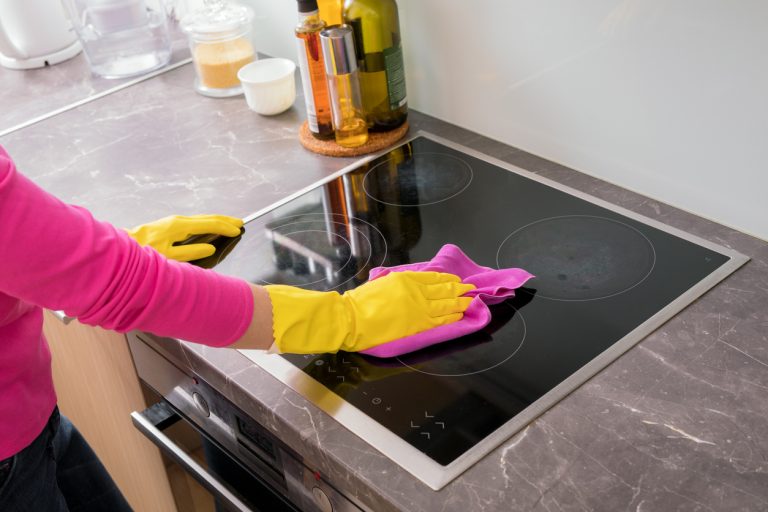
Glass cooktops need a gentle touch. They look sleek, but they can scratch easily if you use the wrong pad or metal tool.
For light stains:
- Spray the area with warm water and a little dish soap
- Wipe with a microfiber cloth
- Buff dry to remove streaks
For burnt-on spots:
- Use a cooktop cream or paste made for glass surfaces
- Spread it over the stain and let it sit briefly
- Use a soft scraper at a low angle only if the manufacturer allows it
- Wipe clean and polish with a dry cloth
For cloudy film or water spots:
- Mix equal parts white vinegar and water
- Lightly mist the area
- Wipe dry right away to avoid streaking
A big mistake people make is using too much cleaner. On glass, more product often means more haze. A thin layer usually works better than a heavy one.
How to Remove Stains from Stainless Steel Cooktop
Stainless steel is durable, but it shows fingerprints, smears, and heat marks fast. The trick is to clean in the direction of the grain so you do not leave streaks.
Try this method:
- Wipe away surface grease with warm soapy water
- Dry with a microfiber towel
- Apply a small amount of stainless steel cleaner or a vinegar-water mix
- Rub gently with the grain
- Buff with a dry cloth for shine
For burnt spots, let a damp cloth sit on the area for a few minutes first. That softens the residue and makes it easier to lift. Avoid steel wool, because it can leave tiny scratches that are hard to hide.
How to Remove Burnt-On Stains from Cooktop
Burnt-on stains are usually the most frustrating. They happen when food, oil, or sugar cooks onto the surface and hardens like glue.
The best method depends on the stain depth:
- Fresh burned residue: Soak and wipe
- Dried residue: Use baking soda paste
- Thick, crusty buildup: Use a cooktop-safe scraper if the surface allows it
A simple baking soda paste can work well. Mix baking soda with a little water until it forms a spreadable paste, then apply it to the stain. Let it sit for 10 to 20 minutes before wiping with a damp cloth.
If the stain is from burnt sugar, act carefully. Sugar can harden quickly and bond strongly to glass or ceramic. In that case, follow the cooktop manufacturer’s guidance and use only approved tools.
Natural Ways to Remove Stains from Cooktop
Many people prefer natural cleaners first, and that makes sense for routine maintenance. Natural methods are often gentle, cheap, and easy to keep on hand.
Useful options include:
- Baking soda for mild abrasion
- White vinegar for grease and hard water film
- Dish soap for everyday grime
- Lemon juice for freshening and light mineral spots
A simple natural cleaner for many stains is this:
- 1 cup warm water
- 1 cup white vinegar
- A few drops of dish soap
Spray lightly, wipe, and dry well. I like this method for weekly upkeep because it keeps buildup from turning into a bigger problem later. Still, natural does not always mean enough for heavy burnt-on stains, so it helps to be realistic.
What Not to Use on a Cooktop
Using the wrong cleaner can make a stain worse or even damage the surface. This is one of the most common mistakes I see in kitchens.
Avoid these unless your manufacturer specifically approves them:
- Steel wool
- Abrasive scrub pads
- Bleach on sensitive surfaces
- Oven cleaner on glass or ceramic tops
- Sharp metal blades on nonapproved surfaces
- Powder cleansers with rough grit
It is also smart not to mix cleaners. Some combinations can create fumes or leave a sticky residue that attracts more dirt. When in doubt, read the care instructions for your exact model.
How to Prevent Cooktop Stains
Prevention is much easier than deep cleaning. A few small habits can keep your cooktop looking cleaner for longer.
Good habits include:
- Wiping spills as soon as the surface cools
- Using lids to reduce splatter
- Cleaning after cooking instead of waiting days
- Drying the surface after each wipe
- Using the right pan size for the burner
I tell people to treat the cooktop like a shirt collar. If you clean it right away, it barely needs effort. If you leave it overnight, it suddenly becomes a project.
Regular maintenance also helps protect the finish. This matters because repeated scrubbing can wear down the surface over time, especially on glass and ceramic tops.
When a Stain May Be Permanent
Not every mark will come off completely. Some stains are actually discoloration, tiny etches, or heat damage rather than surface dirt.
Possible signs include:
- A mark that does not change after proper cleaning
- A cloudy patch that feels smooth but never lifts
- A rainbow-like discoloration from extreme heat
- Tiny scratches from past abrasive cleaning
If this happens, the issue may be cosmetic damage rather than a removable stain. At that point, a manufacturer-approved polish or service recommendation may help more than another round of scrubbing.
Frequently Asked Questions of How to Remove Stains from Cooktop
What is the safest way to remove stains from cooktop surfaces?
The safest method is to start with warm water, dish soap, and a microfiber cloth. If the stain remains, move to a cooktop-safe cleaner or baking soda paste based on your surface type.
Can I use vinegar on my cooktop?
Yes, vinegar can help with grease and water spots on many cooktops. Use it lightly and wipe the surface dry afterward to prevent streaks.
How do I remove burnt-on food from a glass cooktop?
Let the surface cool, then apply a cooktop cleaner or baking soda paste. If the manufacturer allows it, use a soft scraper at a low angle to lift the residue.
Why does my cooktop look cloudy after cleaning?
Cloudiness often comes from soap film, hard water, or too much cleaner. Wiping with a clean damp cloth, then drying with microfiber, usually fixes the problem.
How often should I clean my cooktop?
A quick wipe after each use is ideal, with a deeper clean once a week or as needed. Regular cleaning keeps stains from hardening and makes maintenance much easier.
Conclusion
Knowing how to remove stains from cooktop surfaces comes down to three things: act early, use the right method, and protect the finish. Whether you are dealing with grease, burnt food, or cloudy spots, a gentle approach usually works best and keeps your cooktop looking newer for longer.
The biggest lesson is simple: consistency beats heavy scrubbing. If you build a quick cleaning habit into your routine, stain removal becomes easier, safer, and far less stressful. Try one of these methods after your next spill, and if you want more practical kitchen care tips, keep exploring and share your own cleaning wins in the comments.