Can You Use NuWave Cookware On Gas Stove: Safety Guide

Yes, many NuWave cookware pieces can be used on a gas stove, but the answer depends on the exact pan, pot, or set. NuWave sells different cookware lines, and each may have its own heat and stovetop limits.
For U.S. homes with natural-gas or propane ranges, check the cookware label, box, and model-specific instructions before lighting the burner. If the cookware is marked for stovetop use and has no plastic or electrical parts, it is often suitable for gas cooking. Use a low or medium flame, keep the flame under the pan, and stop if the handle, coating, or base shows damage.
The short answer: Is NuWave cookware gas-stove safe?
NuWave cookware may be safe on a gas stove when the product instructions allow stovetop use. Induction compatibility does not automatically answer every question, so look for wording such as:
- “Gas stovetop safe”
- “Compatible with all stovetops”
- “Suitable for gas, electric, and induction”
- “Oven safe,” with a stated temperature limit
A pan made for the NuWave Precision Induction Cooktop may work on gas if it is also approved for conventional stovetops. However, an item designed only for an induction appliance may not be suitable for direct flame.
The safest rule is simple: the exact NuWave model instructions control. Do not assume that every NuWave pan has the same construction or heat rating.
Why the answer can vary
NuWave cookware may include:
- Stainless steel pots and pans
- Nonstick frying pans
- Ceramic-coated cookware
- Cookware intended for induction
- Removable parts or accessories
- Lids with glass, silicone, or plastic components
These materials respond to direct flame in different ways. A stainless steel body may handle a gas burner well, while a silicone handle or nonstick surface may have a lower heat limit.
How to check your NuWave cookware before using it
Before placing the cookware on a gas burner, inspect the product and its instructions. This takes only a few minutes and can prevent coating damage, uneven heating, or a loose handle.
1. Find the exact model
Look on the bottom of the pan, the handle, the packaging, or the product paperwork. Note:
- Product name
- Model number
- Cookware line
- Coating type
- Maximum stovetop or oven temperature
If you cannot find the manual, search NuWave’s official product support pages using the exact model name or number. Do not rely only on a listing for a similar-looking pan.
2. Check the cooking surface and base
A gas-safe pan should have a stable cooking base. Put the empty pan on a cool burner and check that it sits flat.
Do not use it on gas if:
- The base rocks or spins
- The bottom is badly warped
- The pan has a crack
- The coating is peeling
- The handle is loose
- A rivet or screw is missing
A warped pan can heat unevenly. It may also make poor contact with the burner grate.
3. Look for electrical parts
Do not place an electric NuWave appliance, control panel, induction base, or detachable electrical component over a gas flame. Only use the removable cookware itself if the instructions clearly approve it.
This distinction matters because “NuWave cookware” can refer to both cookware and accessories made for NuWave appliances.
4. Check the handles and lid
A pan may be gas-safe while one of its accessories is not. Check whether:
- The handle is heat resistant
- The lid knob can tolerate stovetop heat
- Silicone parts have a temperature limit
- Plastic parts must stay away from the flame
- The lid is approved for stovetop use
If the instructions are unclear, remove the lid rather than guessing.
How to use NuWave cookware safely on a gas range
Once the cookware is approved for stovetop use, follow these steps.
1. Match the burner to the pan
Choose a burner that is close to the size of the pan base. A very large burner can send flame up the sides. This can damage the handle, outer finish, or nonstick coating.
The flame should stay below the bottom of the pan. It should not curl around the sides.
2. Start with low or medium heat
Gas burners respond quickly. Begin at low or medium heat, then raise it only if needed.
High heat is often unnecessary for:
- Eggs
- Fish
- Pancakes
- Sauces
- Most nonstick cooking
Strong heat can create hot spots and may shorten the life of a coated pan.
3. Do not heat an empty coated pan for long
If your NuWave cookware has a nonstick or ceramic coating, avoid prolonged preheating while it is empty. Add a small amount of oil or food when appropriate, and stay near the stove.
Never leave an empty pan over an active gas flame.
4. Keep the handle away from the burner
Turn the handle inward, but not directly over another hot burner. This reduces the chance of:
- Accidentally hitting the handle
- Catching loose clothing
- Heating the handle
- Pulling the pan off the range
5. Use suitable utensils
For coated cookware, use wood, silicone, or other utensils approved for nonstick surfaces. Metal tools can scratch some coatings, especially when used with force.
6. Let the pan cool before washing
Do not place a very hot pan under cold water. A sudden temperature change can warp the base or damage a coating.
Let the cookware cool first. Then follow the care instructions for hand washing or dishwasher use.
Gas stove use by cookware type
The material and design affect how NuWave cookware behaves over a flame. The table below gives general guidance, but the product manual remains the final authority.
| NuWave cookware type | Gas-stove use | Main concern |
|---|---|---|
| Stainless steel | Often suitable when marked for stovetop use | Uneven heating, hot spots, warping |
| Nonstick-coated pan | Often suitable at low or medium heat | Coating damage from high heat or empty heating |
| Ceramic-coated pan | Often suitable if approved | Chipping, thermal shock, overheating |
| Induction-compatible pan | May also work on gas | Induction approval alone is not enough |
| Pan with silicone handle | Sometimes suitable | Handle heat limit and flame exposure |
| Pan with plastic parts | Use caution | Plastic can soften, melt, or deform |
| Electric or appliance-mounted cookware | Not suitable over gas | Electrical damage and fire risk |
Induction compatibility is not the same as gas compatibility
Induction cookware needs a magnetic base. Gas cookware does not need to be magnetic. Therefore, a pan can work on induction, gas, electric, or a combination of these—but that depends on its full construction.
An induction-ready label tells you that the base can interact with an induction cooktop. It does not automatically confirm the temperature limit of the handle, lid, coating, or exterior finish.
Nonstick surfaces need extra care
Nonstick cookware can often be used on gas, but high heat is its main enemy. A gas flame can rise around the pan faster than expected, especially on a small or lightweight pan.
Use these habits:
- Keep the flame under the base
- Avoid maximum burner settings
- Do not broil or expose the pan to a direct oven flame unless approved
- Stop using the pan if the coating blisters or peels
- Do not use abrasive pads unless the manual permits them
What to do if the cookware smokes, smells, or heats unevenly
A problem during cooking does not always mean the cookware is unsafe, but it needs attention. Turn off the burner if you see smoke, smell melting plastic, or notice a damaged coating.
| Symptom | Likely cause | Safe response |
|---|---|---|
| Flame reaches the sides | Burner is too large or heat is too high | Lower the flame or move to a smaller burner |
| Food burns in one spot | Pan is heating unevenly | Lower heat and stir or rotate the pan |
| Handle becomes very hot | Flame or pan size is wrong | Turn the handle away and reduce heat |
| Coating blisters or peels | Excess heat, damage, or age | Stop using the pan and replace it |
| Pan rocks on the grate | Warped base | Stop using it on the range |
| Plastic smell | A plastic part is too close to flame | Turn off the burner and inspect the cookware |
| Pan makes a popping sound | Moisture, thermal stress, or damage | Turn off heat and allow it to cool |
Do not touch a hot pan to investigate a problem. Use the control knob first. If a flame escapes the pan or a grease fire starts, turn off the burner if you can do so safely. Never use water on a grease fire. Use a suitable lid or a kitchen fire extinguisher, and call 911 if the fire does not go out quickly.
Common mistakes to avoid
Several errors can damage cookware even when the cookware is technically approved for a gas stove.
Assuming every NuWave item is interchangeable
NuWave cookware lines may have different coatings, handles, bases, and care instructions. A rule that applies to one model may not apply to another.
Using a large flame for faster cooking
A bigger flame does not always cook food faster. It can heat the sides and handle instead of the pan base. It also makes temperature control harder.
Ignoring a warped bottom
A small amount of wear may not seem serious, but a warped pan can rock on the grate. Replace cookware that no longer sits securely.
Leaving a pan unattended
Gas cooking adds an open flame. Stay nearby, especially when using oil, sugar, or high heat.
Moving a hot pan to a cold surface
A sudden temperature change can stress metal and coatings. Use a dry, heat-resistant trivet or a surface approved for hot cookware.
Using cookware after coating damage
If the coating is deeply scratched, flaking, or peeling, replacement is the safest choice. Do not try to repair the cooking surface at home.
Can you use NuWave cookware in the oven after using it on gas?
Only if the exact cookware and its parts are oven safe. Gas-stove approval does not automatically mean oven approval.
Check the stated oven temperature and identify the part with the lowest limit. For example, a pan body may tolerate oven heat while its silicone grip, glass lid, or plastic knob cannot.
Before placing the cookware in an oven, confirm:
- The maximum oven temperature
- Whether the lid is included in that limit
- Whether the handle must be removed
- Whether broiler use is allowed
- Whether the pan can move directly from burner to oven
If the instructions do not state an oven limit, do not use the cookware in the oven.
Can you use NuWave cookware on an electric or induction stove?
Many cookware pieces approved for gas may also work on electric ranges. Induction is different because the cooktop needs a magnetic base.
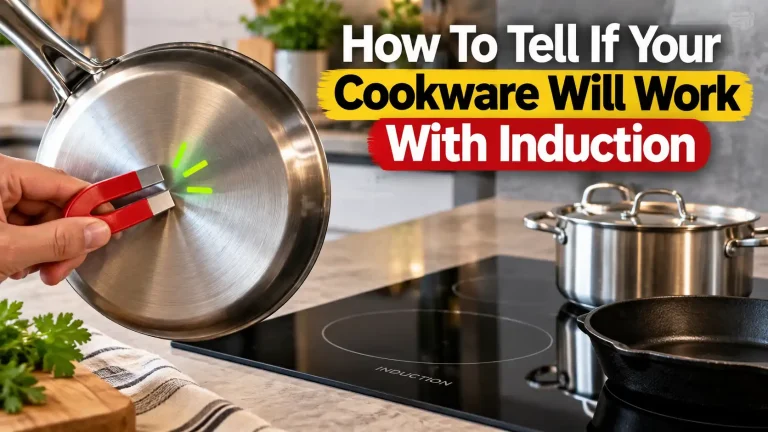
To check induction compatibility, look for an induction symbol or wording such as “induction ready.” You can also test the base with a magnet, although the magnet test is only a basic screening method. A magnetic base does not prove that the pan has the correct shape, size, or performance for every induction cooktop.
The best match is a product description or manual that names the cooktop types directly.
Frequently asked questions
Can I use a NuWave nonstick pan on a gas stove?
Usually, if the model instructions approve stovetop use. Use low or medium heat, keep the flame below the base, and avoid long empty preheating. Replace the pan if its coating blisters, flakes, or peels.
Can a NuWave induction pan go on a gas burner?
It may, but induction compatibility alone does not confirm gas safety. Check the exact model instructions for gas, electric, or all-stovetop approval.
Why is my NuWave pan smoking on gas?
The burner may be too high, the pan may be empty, oil may be overheated, or a handle or coating may be exposed to flame. Turn off the burner, let the pan cool, and inspect it before using it again.
Can I put a NuWave glass lid on a gas stove?
Only if the lid instructions allow stovetop use. Glass lids can tolerate heat but may crack from thermal shock or direct flame. Keep the flame below the pan and avoid sudden temperature changes.
Should I use high heat with NuWave stainless steel cookware?
Not by default. Stainless steel can tolerate heat, but high heat can cause hot spots, sticking, discoloration, and warping. Start lower and increase the heat only when the recipe requires it.
Final recommendation
You can use NuWave cookware on a gas stove when the exact piece is approved for stovetop use. Confirm the model, inspect the base and handle, use a burner that matches the pan, and keep the flame below the cookware.
If the manual is missing or unclear, contact NuWave support or choose cookware with a clear “gas stovetop safe” or “all stovetops” marking. When safety information conflicts, follow the more restrictive instruction and do not use the pan over an open flame until its rating is confirmed.