What Is The Best Way To Clean An Induction Cooktop: Fast

Use a soft cloth, mild dish soap, and an approved cooktop scraper on a cool, dry surface.
The best way to clean an induction cooktop is to remove spills soon after cooking, before sugar, grease, or starch hardens on the glass surface. Induction cooktops are easy to care for, but their smooth glass ceramic tops can scratch, stain, or crack when cleaned with harsh tools or products. This guide explains the safest method, the right supplies, common mistakes, and ways to remove stubborn marks without damaging your cooktop.
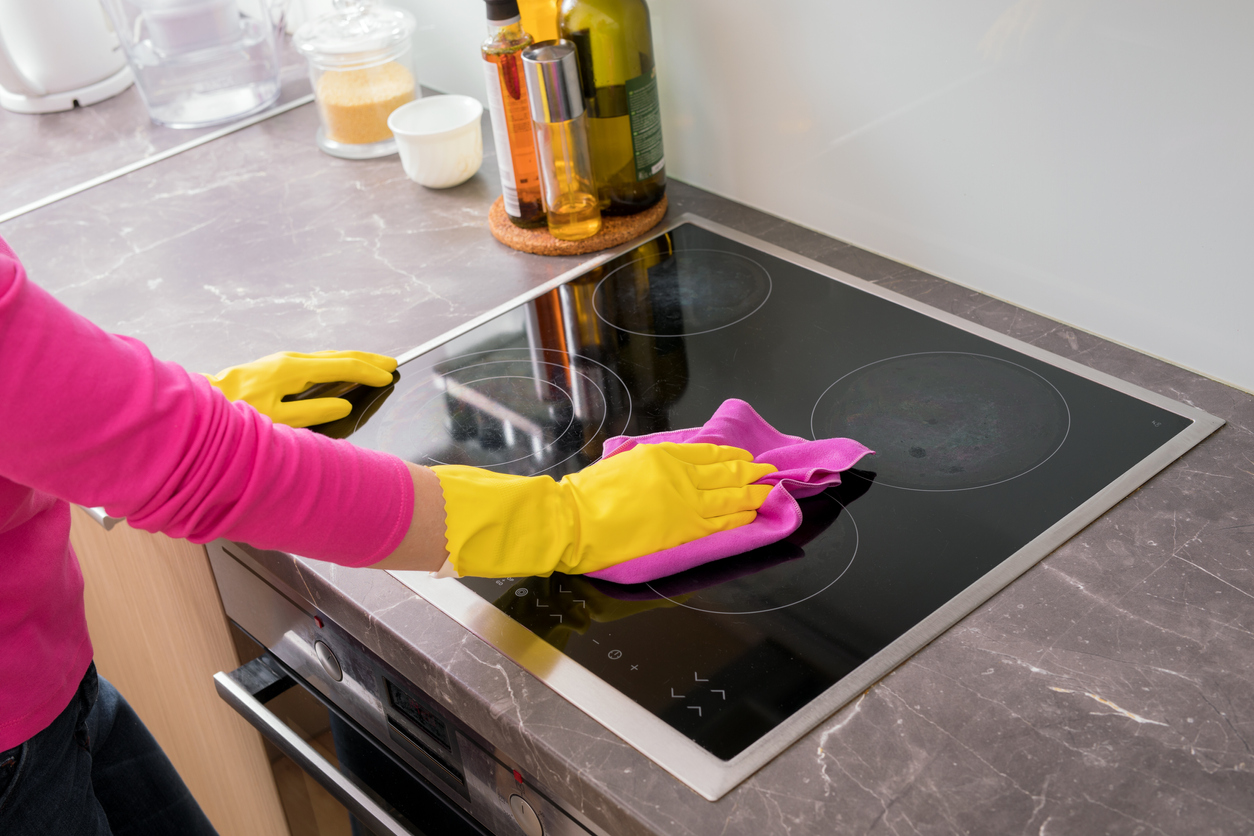
Why Proper Induction Cooktop Cleaning Matters
An induction cooktop uses magnetic energy to heat compatible cookware. The surface itself stays cooler than a traditional electric burner, but spilled food can still bake onto the glass when a hot pan sits over it.
Regular cleaning keeps the cooktop bright and helps you spot chips, cracks, and control problems early. It also prevents grease from building up around the touch controls, where it can make buttons less responsive.
The best way to clean an induction cooktop depends on the type of mess. Fresh spills need only a damp cloth, while burned sugar or dried sauce may need a cooktop scraper and a cleaner made for glass ceramic surfaces.
Most manufacturers recommend avoiding abrasive powders, steel wool, rough scrub pads, oven cleaner, and chlorine bleach. These products can leave fine scratches or damage the cooktop’s finish.
:max_bytes(150000):strip_icc()/MS-Clean-induction-cooktop-getty-b64b423390234e5e92d5bd00d8635469.jpg)
What You Need Before Cleaning
Gather the right supplies before you begin. Using safe tools makes the process faster and lowers the risk of scratches.
You will need:
• A soft microfiber cloth or nonabrasive sponge
• Warm water
• A few drops of mild dish soap
• A cooktop cleaner labeled for glass or glass ceramic surfaces
• A cooktop scraper with a sharp, protected blade
• A clean, dry towel
• A small bowl for warm soapy water
Avoid using a kitchen knife, razor blade held by hand, scouring powder, or a rough scrubber. A proper cooktop scraper holds the blade at a safe angle and gives you better control.
Check the owner’s manual before using any cleaner. Some cooktop brands recommend a specific cream or polish, and following those instructions can help protect your warranty.

The Best Way to Clean an Induction Cooktop Step by Step
The best way to clean an induction cooktop is simple: turn it off, let it cool, remove loose debris, clean the surface gently, and dry it fully.
1. Turn Off the Cooktop
Switch off every cooking zone and remove the cookware. If the cooktop has a lock setting, activate it after the surface cools to prevent accidental starts while you clean.
Do not clean around active controls or hot cookware. Although induction surfaces cool faster than many electric cooktops, the glass can remain hot after the pan is removed.
2. Let the Surface Cool
Wait until the surface feels cool to the touch. A wet cloth on very hot glass can create a rapid temperature change, which may stress the surface.
There is one exception. If a sugary spill occurs, follow your manufacturer’s instructions quickly. Melted sugar, syrup, and caramel can bond tightly as they cool and may cause permanent marks.
3. Remove Loose Food
Use a dry microfiber cloth to brush away crumbs, salt, and other loose particles. Do not drag a heavy pan across the surface to push crumbs aside.
Small grains of salt or hardened food can act like sand under cookware. Removing them first helps prevent scratches during the rest of the cleaning process.
4. Wipe With Mild Soapy Water
Mix warm water with a few drops of mild dish soap. Dip a soft cloth into the mixture, wring it out well, and wipe the entire cooktop.
Work in small circles without pressing hard. Pay close attention to the edges of cooking zones, where grease and sauce often collect.
5. Treat Dried or Burned Food
For stuck food, place a warm, damp cloth over the spot for several minutes. The moisture softens the residue and reduces the need for hard scrubbing.
If the residue remains, apply a small amount of cooktop cleaner. Use a cooktop scraper only as directed, holding it at a low angle and moving it gently across the residue.
Never scrape with a damaged blade. A dull or chipped scraper may drag grit across the glass and cause scratches.
6. Rinse Away Cleaner
Wipe the surface with a clean, damp microfiber cloth. This removes soap and cleaner residue that could leave a cloudy film.
Do not flood the cooktop with water. Excess liquid can run into the control panel, seams, or ventilation areas.
7. Dry and Buff the Surface
Use a dry, lint-free towel to remove all moisture. Finish with a light buff to reduce streaks and bring back the smooth shine.
Drying also helps you find missed grease. If you see a rainbow-like film, repeat the cleaning process with a fresh cloth rather than using a stronger chemical.
How to Remove Common Induction Cooktop Stains
Different spills need different methods. The safest approach is to start with the mildest method and increase cleaning strength only when needed.
Grease and Oil
Grease usually responds well to warm water and mild dish soap. Wipe it away with a microfiber cloth, then rinse and dry the surface.
For a thin, sticky film, use a small amount of cleaner made for glass ceramic cooktops. Avoid using too much product because excess cream can be harder to remove.
Dried Sauce or Milk
Dried sauce, milk, and starch can leave a dull ring. Cover the spot with a warm, damp cloth for five to ten minutes, then wipe gently.
If the mark stays, use an approved cooktop scraper. Keep the blade nearly flat and make short, controlled strokes.
Burned Sugar or Syrup
Sugar is one of the most difficult spills because it can harden into a glass-like layer. Remove it according to the cooktop manual while the surface is warm but safe to handle, if the instructions allow this.
Do not pour cold water on a hot sugary spill. A sudden temperature change may damage the glass, and the spill can spread into a larger sticky area.
White Mineral Marks
White spots often come from hard water or cleaner residue. Wipe the area with a damp cloth, then dry it well.
Some manufacturers allow a small amount of diluted vinegar for mineral film, but not every brand recommends it. Check the manual first, and never mix vinegar with bleach or other cleaners.
Metal Marks
Sliding aluminum or copper cookware can leave gray streaks on the glass. These marks may sit on the surface rather than represent deep damage.
Use a cooktop cleaner approved for glass ceramic surfaces. Avoid hard scrubbing, which can turn a surface mark into a permanent scratch.

How to Use a Cooktop Scraper Safely
A cooktop scraper is useful, but it must be used with care. Think of it as a tool for lifting residue, not a tool for digging into the glass.
Follow these steps:
- Confirm that the surface is safe to touch and follow the product instructions.
- Hold the scraper at a shallow angle.
- Push gently under the residue instead of stabbing downward.
- Use short strokes in one direction.
- Wipe away the loosened food with a soft cloth.
- Clean and dry the area after scraping.
Keep the blade clean and replace it if it becomes rusty, bent, or damaged. Never use a loose razor blade or a knife as a substitute.
The best way to clean an induction cooktop with burned food is to soften the residue first. Scraping a dry, gritty layer with force creates more risk than benefit.
:max_bytes(150000):strip_icc()/GettyImages-1201366879-0097ece9a851495c8bba218cff124aeb.jpg)
Cleaning the Induction Cooktop Controls
Touch controls need gentle cleaning. Grease, water, and food particles can collect around the control area and affect how well it responds.
Use a barely damp microfiber cloth. Wipe across the controls, then dry them at once with a clean towel.
Do not spray cleaner directly on the control panel. Spray a small amount onto the cloth instead, and keep liquid away from seams and openings.
If the controls beep or seem stuck after cleaning, turn off the cooktop at the breaker only if the manual permits it. Let the surface dry fully, then restore power and check the controls.
Common Cleaning Mistakes to Avoid
Many cooktop problems come from using too much force or the wrong product. Avoid these common mistakes:
• Cleaning with steel wool or metal scouring pads
• Using abrasive powder or gritty cream
• Spraying glass cleaner directly onto the cooktop
• Applying oven cleaner or bleach
• Sliding dirty cookware across the surface
• Cleaning with a knife or unprotected razor
• Pouring water over the cooktop
• Wiping the surface while it is extremely hot
• Leaving cleaner residue behind
• Placing a hot lid face down on the glass
Some glass cleaners contain ammonia or other ingredients that may leave streaks or damage certain finishes. A product made for glass ceramic cooktops is usually a safer choice.
Also check the bottom of your cookware. Rough, warped, or dirty pan bases can scratch the cooktop and may heat unevenly.
How Often Should You Clean an Induction Cooktop?
Wipe the cooktop after each use once it has cooled. This quick habit takes less than a minute and prevents small spills from becoming hard, burned layers.
Perform a deeper clean when you notice grease, cloudy patches, or cooked-on residue. For many homes, once or twice a week is enough if spills are wiped up promptly.
A practical routine looks like this:
• After cooking: Remove crumbs and fresh spills.
• Once cool: Wipe with warm soapy water.
• Weekly: Use cooktop cleaner if the surface looks dull.
• After a major spill: Clean the area as soon as it is safe.
• Monthly: Inspect for scratches, chips, cracks, and damaged controls.
The best way to clean an induction cooktop is often prevention. Use cookware with clean, smooth bottoms, avoid overfilled pans, and wipe spills before they bake onto the surface.
Personal Lessons From Everyday Cooktop Cleaning
One lesson that stands out from testing cleaning routines is that waiting makes the job harder. A small spot of pasta water may wipe away in seconds when fresh, but the same spot can become a crusty ring after several cooking cycles.
Another common mistake is using too much cleaner. A thick layer of cream can make the surface look cloudy, even after wiping. A small amount spread across a cool surface works better than a large amount scrubbed with pressure.
It is also easy to assume that a shiny surface needs a strong chemical. In practice, a soft cloth, warm water, patience, and the right scraper usually solve most problems.
If you rent your home or plan to sell it, take photos of any existing chips or cracks before cleaning. This simple step can help separate old damage from a new cleaning problem.
When to Stop Cleaning and Seek Help
Cleaning cannot repair every type of damage. Stop using the cooktop and contact the manufacturer or a qualified technician if you notice a crack, deep chip, exposed wiring, burning odor, or repeated control errors.
Do not use a cracked glass cooktop. Moisture may reach electrical parts, and heat can make the damage worse.
A scratch that only affects the surface may not change performance, but a deep scratch or chip can become a safety concern. When in doubt, check the manual or request professional advice.
Frequently Asked Questions About the Best Way to Clean an Induction Cooktop
Can I use regular glass cleaner on an induction cooktop?
Regular glass cleaner may leave streaks and may not remove cooked-on grease well. Use a product labeled for glass ceramic cooktops unless your manufacturer provides different instructions.
Can I clean an induction cooktop with vinegar?
Some manufacturers allow diluted vinegar for mineral marks, but others advise against it. Check your owner’s manual first, and never mix vinegar with bleach, ammonia, or other cleaning products.
Can I use baking soda on an induction cooktop?
Baking soda can be mildly abrasive, so it may scratch some glass ceramic surfaces when rubbed forcefully. Use a manufacturer-approved cooktop cleaner instead, or test any approved method in a small area first.
How do I remove burned food from an induction cooktop?
Let the surface cool as directed, soften the residue with a warm damp cloth, and apply cooktop cleaner. Use an approved scraper gently at a shallow angle, then wipe, rinse, and dry the area.
Can I clean an induction cooktop while it is hot?
Do not wipe a very hot surface with a wet cloth because sudden cooling can stress the glass. Follow the manufacturer’s instructions for sugary spills, since those may require careful action before they fully harden.
Why does my induction cooktop look cloudy after cleaning?
Cloudiness often comes from cleaner residue, grease film, or mineral deposits. Wipe with a clean damp microfiber cloth, then dry and buff with a lint-free towel.
How can I prevent scratches on an induction cooktop?
Keep cookware bottoms clean and smooth, and never slide pots across the glass. Remove crumbs before placing pans on the surface, and use only soft cloths and approved scrapers during cleaning.
Conclusion
The best way to clean an induction cooktop is to act early and use gentle tools. Turn the cooktop off, let it cool safely, wipe away loose food, clean with mild soapy water, treat stubborn spots with approved cooktop cleaner, and dry the surface completely.
Avoid abrasive pads, harsh chemicals, knives, excess water, and forceful scraping. With a quick wipe after each meal and a deeper clean when needed, your induction cooktop can stay smooth, bright, and ready for years of cooking. Check your owner’s manual for brand-specific advice, and share your favorite cooktop care tip in the comments.