How To Remove Burnt Food From Glass Cooktop: Easy Guide

You can remove burnt food from a glass cooktop with gentle scraping, baking soda, and safe cleaners.
A glass cooktop looks sleek, but burnt spills can turn it into a sticky, frustrating mess fast. I’ve cleaned plenty of them over the years, and the good news is that most burnt food comes off without scratching the surface if you use the right method and a little patience. This guide walks you through the safest, most effective ways to remove burnt food from glass cooktop surfaces while keeping the cooktop shiny, smooth, and damage free.
Why Burnt Food Sticks to a Glass Cooktop
Burnt food hardens onto a glass cooktop because heat bakes sugars, starches, oils, and sauces into a crust. Once that crust cools, it bonds tightly to the surface and can feel almost glued on. The more time it sits, the harder it gets, which is why fast cleanup matters.
A glass cooktop is not truly fragile in daily use, but it can scratch if you use the wrong tool. That is why safe cleaning is about both removal and protection. The goal is to lift the mess without grinding grit across the glass.
What You Need Before You Start
Before you try to remove burnt food from glass cooktop surfaces, gather a few simple supplies. In my experience, having everything ready keeps you from rushing and making scratches.
- Soft microfiber cloths
- Baking soda
- White vinegar
- Dish soap
- A plastic scraper or cooktop scraper
- Warm water
- Nonabrasive sponge
- Cooktop cleaner, if available
If the spill is thick, a scraper is often the most helpful tool. Just make sure it is made for glass cooktops or uses a fresh razor blade at a shallow angle, depending on the manufacturer’s instructions.
The Safest Step by Step Method to Remove Burnt Food from Glass Cooktop
The best way to remove burnt food from glass cooktop surfaces is to start gentle and only increase pressure if needed. I have found that this layered approach works better than scrubbing hard from the start.
1. Let the cooktop cool fully
Never clean a hot cooktop. Let it cool completely so you do not burn yourself and so the cleaner does not evaporate too fast.
A cool surface also makes the burnt food easier to judge. Sometimes what looks like a permanent stain is just a crust that will lift with moisture.
2. Wipe away loose debris
Use a dry microfiber cloth to remove crumbs and loose bits. This keeps grit from acting like sandpaper while you clean.
If food is still soft around the edges, gently lift it away. Do not rub hard at this stage.
3. Soften the burnt area
Spray the area with white vinegar or place a warm damp cloth on top for a few minutes. This helps loosen dried sauce, sugar, or grease.
For really stubborn spots, I like to lay a cloth soaked in hot water over the area for 10 to 15 minutes. That small pause often saves a lot of elbow grease later.
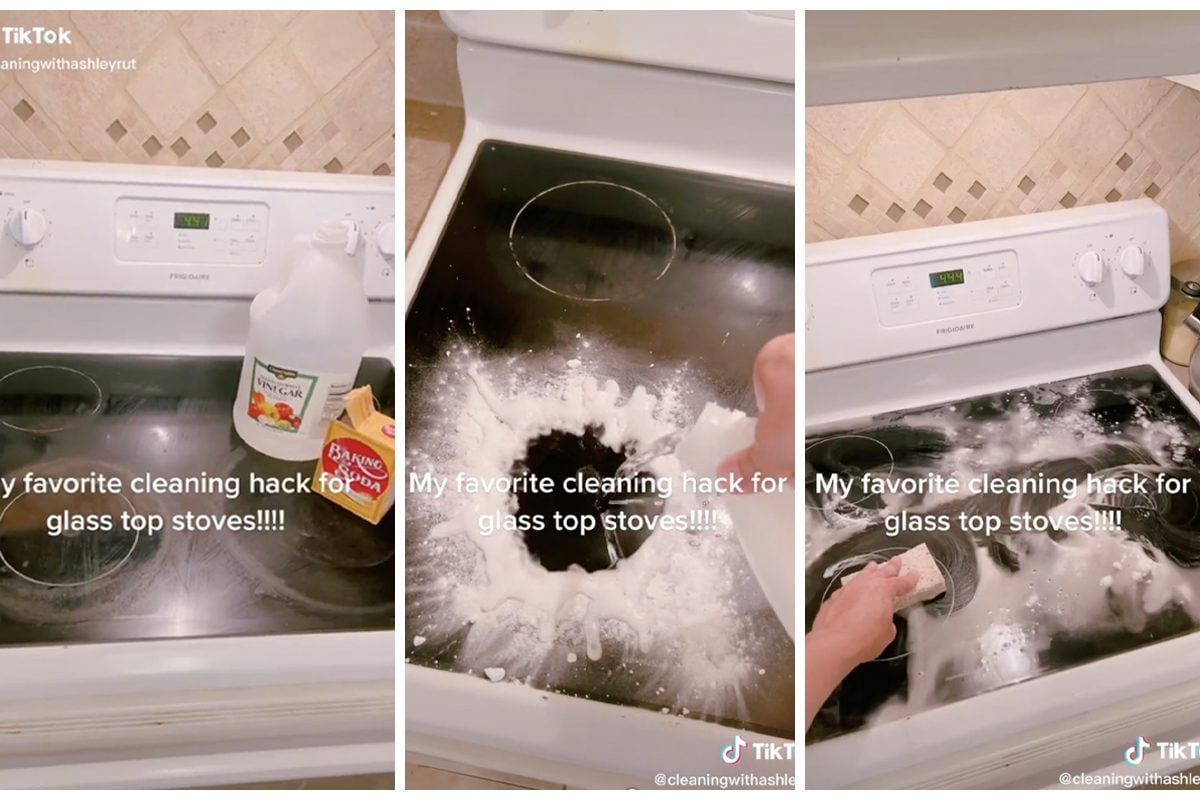
4. Make a baking soda paste
Mix baking soda with a little water until it forms a spreadable paste. Apply it to the burnt food and let it sit for 10 to 15 minutes.
Baking soda helps break down residue without being too harsh. It is one of the easiest ways to remove burnt food from glass cooktop surfaces safely.
5. Gently scrape the residue
Hold the scraper at a low angle and glide it under the burnt food. Use short, careful strokes.
Do not dig into the glass. Think of it like shaving off the top of a crust, not chiseling ice.
6. Wipe clean
Use a damp microfiber cloth to remove the paste and loosened residue. If needed, add a drop of dish soap to warm water and wipe again.
Dry the surface with a clean cloth so you can spot any remaining marks. A dry finish also helps bring back the shine.
7. Repeat if needed
Heavy burnt-on food may need a second round. Repeat the soak, paste, and scrape method until the area is clear.
If one technique is not enough, do not jump straight to abrasive scrubbing. Patience is safer than force.

Best Cleaning Methods for Different Types of Burnt Food
Not all spills behave the same way. Sugar, grease, and starch each leave different kinds of mess on a glass cooktop.
Burnt sugar or syrup
Sugar hardens fast and can form a glassy layer. Soften it with a wet towel first, then scrape carefully.
Avoid using a dry scraper on sugary spills. Once sugar cools, it can cling tightly and may need repeated moisture to release.
Burnt grease
Grease usually leaves a greasy film plus dark spots. Use dish soap and warm water first, then baking soda paste if needed.
If the area still feels slick, wipe it with vinegar after the soap step. That often removes the last oily layer.
Burnt sauce or soup
Tomato sauce and soup often leave both color and crust. Let the spill soak, then use a scraper and a nonabrasive sponge.
If there is a stain after the crust is gone, a cooktop cleaner may help polish it out. Some color can remain if the spill burned for a long time, but it is often reduced a lot.
Burnt milk
Milk can leave a cloudy, sticky film. Soak the area with warm water, then use a baking soda paste and a soft cloth.
Milk spills can look worse than they are. Once the film lifts, the glass usually looks much better.
What Not to Do When Cleaning a Glass Cooktop
I have seen more damage from the wrong cleaning habit than from the spill itself. The biggest rule is simple: do not use anything that can scratch the glass.
Avoid these mistakes:
- Steel wool or abrasive pads
- Powder cleaners with rough grit
- Knives or metal tools without control
- Scrubbing in circles with heavy pressure
- Cleaning while the surface is hot
- Using bleach unless the manufacturer says it is safe
- Letting spilled sugar sit for too long before cleaning
A glass cooktop can stay beautiful for years, but only if you treat it gently. One rough scrub can leave tiny scratches that catch light forever.
Extra Tips That Make Burnt Food Easier to Remove
A few small habits can make cleanup much easier. These are the same tricks I use when helping someone rescue a cooktop after a messy dinner.
- Wipe spills as soon as the cooktop cools
- Keep a scraper nearby for quick cleanup
- Use a microfiber cloth instead of paper towels when possible
- Clean in daylight or bright kitchen light so you can see residue
- Polish with a cooktop cleaner for a smooth final finish
- Check your appliance manual before using a blade scraper
One thing I learned the hard way is that trying to “power through” a burnt spot usually causes more trouble. A few minutes of soaking saves a lot of effort.
How to Prevent Burnt Food from Buildup on Glass Cooktops
Prevention is much easier than repair. If you cook often, a few habits can reduce burnt-on messes before they happen.
- Use pots and pans that sit flat
- Keep burner heat at the lowest level that still works
- Watch sugary foods closely
- Stir sauces and soups often
- Wipe up splatters soon after the surface cools
- Do a light clean after each cooking session
A clean cooktop is like a clean windshield. A little upkeep helps you see everything better and keeps the surface in good shape longer.
When Burnt Marks May Be Permanent
Sometimes what looks like burnt food is actually discoloration or etching. If the mark does not lift after soaking, scraping, and using a cooktop cleaner, the glass itself may be damaged.
This can happen after repeated high heat, melted plastic, or very old spills. In that case, you may improve the appearance, but you may not remove the mark completely.
If you are unsure, check the appliance manual or contact the manufacturer. That is the safest way to avoid making the problem worse.
Frequently Asked Questions of How to Remove Burnt Food from Glass Cooktop
How do I remove burnt food from glass cooktop without scratching it?
Use a plastic scraper or an approved cooktop scraper at a low angle, and soften the spill first with warm water, vinegar, or a baking soda paste. Avoid abrasive pads and metal tools that can scratch the glass.
Can I use vinegar to remove burnt food from glass cooktop surfaces?
Yes, vinegar can help loosen residue and cut through grease. It works best as a softening step before scraping or wiping, not always as a stand-alone solution for heavy burnt-on spots.
Is baking soda safe for a glass cooktop?
Yes, baking soda is usually safe because it is mild and nonabrasive. Make it into a paste with water and use a soft cloth, then wipe it away with a damp microfiber cloth.
What is the best scraper for burnt food on a glass cooktop?
A scraper made for glass cooktops is best because it is designed to work at the right angle. If your manufacturer allows it, a razor scraper can also work when used carefully and gently.
Why does my glass cooktop still look cloudy after cleaning?
Cloudiness can come from leftover cleaner, mineral buildup, or a light stain from burnt food. Try wiping with vinegar, then polish with a cooktop cleaner and a dry microfiber cloth.
Can burnt food damage a glass cooktop permanently?
Yes, if the spill burns for a long time or if the surface is scratched during cleaning, the mark can become permanent. Quick cleanup and gentle tools give you the best chance of restoring the surface.
Conclusion
The easiest way to remove burnt food from glass cooktop surfaces is to stay patient, use soft cleaners, and let moisture do most of the work. A cool surface, a baking soda paste, and a careful scraper can handle most stubborn spills without damage.
The big lesson is simple: gentle cleaning wins. If you build the habit of wiping spills early and using the right tools, your cooktop can stay clear, smooth, and ready for the next meal. Try these steps the next time a spill burns on, and share your own cleaning tips or questions in the comments so others can learn from your experience.