Caraway Cookware Organizer: Smart Storage Guide

A Caraway cookware organizer can help keep pots, pans, lids, and utensils neat in a U.S. kitchen. The best setup depends on your cabinet width, drawer depth, pan size, and whether you store pans upright or in a stack.
Caraway cookware has coated cooking surfaces. So, the main goal is not just to save space. It is to prevent metal edges, hard lids, and heavy pans from rubbing against the coating. A good organizer should also let you lift one pan without moving the whole stack.
This guide explains how to choose and use a cookware organizer for Caraway pans. It also covers cabinet measurements, lid storage, common mistakes, care limits, and lower-cost alternatives.

What Is a Caraway Cookware Organizer?
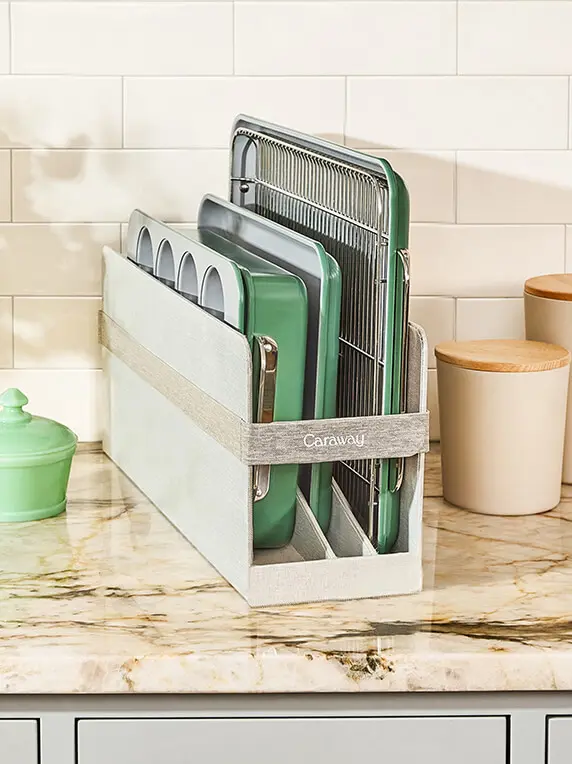
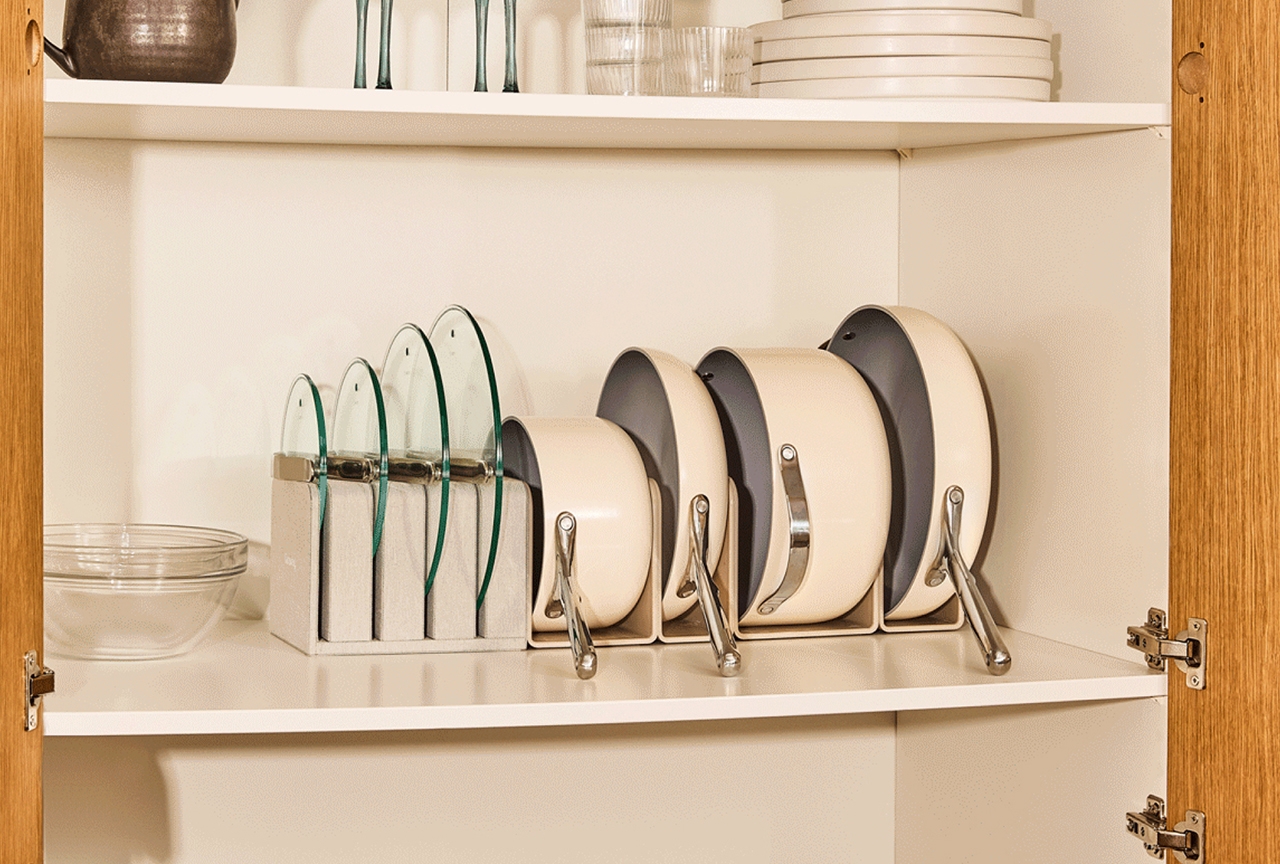
A Caraway cookware organizer is a storage system made to hold cookware in a cabinet, pantry, drawer, or on a counter. It may use vertical dividers, shelves, slots, or a rack-style frame.
The term can mean two things:
- A Caraway-branded storage product made for kitchen organization.
- A third-party rack or divider used to store Caraway cookware.
These are not always the same. A product may fit the look of Caraway cookware but still lack the right width, height, or weight capacity.
For most homes, an organizer should solve four problems:
- Keep pans from scratching each other.
- Make lids easy to find.
- Use vertical cabinet space.
- Leave enough room to lift cookware safely.
A cookware organizer does not improve a pan’s cooking performance. Its value comes from easier storage, less clutter, and better protection during daily use.
Measure Your Cabinet Before Buying
Measure the cabinet, drawer, or shelf before choosing a Caraway cookware organizer. The key numbers are width, depth, height, and the size of the cabinet opening.
Use a tape measure and record the following:
| Measurement | How to measure | Why it matters |
|---|---|---|
| Opening width | Measure between the cabinet sides | Shows whether the organizer can enter the space |
| Interior width | Measure inside the cabinet | Shows how much usable room you have |
| Interior depth | Measure from the front to the back | Prevents the rack from sticking out |
| Interior height | Measure from the shelf to the lowest obstruction | Determines which pans can stand upright |
| Door clearance | Close the door with a test object inside | Prevents the door from hitting the organizer |
| Shelf strength | Check for bowing or loose supports | Heavy cookware can strain weak shelves |
Leave a small margin around the organizer. Do not plan to use every available inch. A tight fit can make the rack hard to remove and may force pans against cabinet walls.
For a drawer, measure the drawer box rather than the front panel. The front may be wider or taller than the usable interior. Also check the drawer’s weight rating if you plan to store several cast iron, stainless steel, or ceramic pieces.
A simple fit example
Suppose a cabinet has:
- 18 inches of interior width
- 20 inches of interior depth
- 14 inches of interior height
An organizer that is 17.5 inches wide, 19 inches deep, and 13 inches tall may fit on paper. Yet it could still fail if the cabinet has hinges, a center support, or a door that swings into the space.
Measure around those parts. Cabinet shape often matters more than the advertised organizer size.

Choose the Right Organizer Style
The best organizer style depends on how often you use each pan and how much cabinet space you have. There is no single best setup for every Caraway cookware set.
Vertical pan rack
A vertical rack stores pans on their sides. Each pan rests in its own slot or divider.
This style works well when:
- You use several pans each week.
- You want one-pan access.
- Your cabinet has enough height.
- You want to avoid lifting a heavy stack.
Place the largest or heaviest pan in a wide, strong slot. Smaller pans can use narrower spaces. Do not force a pan into a slot that presses on its rim or coated surface.
Adjustable divider rack
An adjustable divider rack uses movable supports. You can change the spacing for a fry pan, sauté pan, saucepan, or Dutch oven.
This style offers flexibility, but the dividers must stay stable. A loose divider can shift when you pull out a pan. Choose a rack with a broad base and supports that lock or sit firmly in place.
Shelf riser
A shelf riser creates a second level inside a cabinet. It works best for lighter cookware, lids, or small saucepans.
A riser may not be the best choice for a large Dutch oven or a tall stack of pans. Check the weight limit and keep heavy items on the lower level whenever possible.
Pull-out cabinet rack
A pull-out rack slides toward you. It can make deep cabinets easier to use, but it requires careful installation and a strong mounting surface.
Use this option only when:
- The rack fits the cabinet’s interior width.
- The hardware supports the total load.
- The cabinet floor or side panels are strong enough.
- The rack will not hit hinges, plumbing, or electrical parts.
For rental homes, a freestanding rack is often simpler because it does not require drilling.
Lid holder
A lid holder stores lids upright or on their sides. This can reduce the most common source of cookware clutter: loose lids sliding around a cabinet.
Choose a holder that supports the lid by its rim or handle without putting pressure on the glass or metal surface. Keep lids away from sharp tools and heavy pans.

How to Organize Caraway Cookware Step by Step
Start with the cookware you use most. Then build the organizer around access, weight, and surface protection.
1. Empty the storage area
Remove every pan, lid, utensil, and unrelated item. Wipe the cabinet or drawer with a soft, damp cloth and let it dry.
This step reveals wasted space and damaged shelf surfaces. It also prevents crumbs or grit from rubbing against the cookware.
2. Group similar pieces
Create groups for:
- Fry pans
- Sauce pans
- Sauté pans
- Dutch ovens
- Lids
- Baking pieces
- Cooking tools
Keep lids with the cookware group they serve, but store them in a separate lid section when possible.
3. Separate heavy and light items
Place heavy pieces low and near the strongest part of the cabinet. Do not put a large, heavy pot on a thin shelf riser unless the riser is designed for that load.
Light pans and lids can go higher. This arrangement reduces strain on shelves and makes lifting safer.
4. Add a protective layer
Use a clean, soft pan separator between stacked pieces if the cookware manufacturer allows stacking. A felt or fabric separator can reduce contact between surfaces.
Avoid rough cardboard, dirty towels, or materials that shed fibers. Do not use anything damp. Moisture trapped between pans can contribute to odors or surface problems.
5. Set the largest items first
Place the Dutch oven, largest sauté pan, or widest fry pan first. These pieces determine how much room remains.
If you use a vertical rack, give large pans the widest stable spaces. If you stack pans, put the largest pan at the bottom and place separators between pieces.
6. Store lids upright when possible
An upright lid section is usually easier to use than a flat lid pile. Arrange lids by size, with the most-used lids near the front.
Do not allow a lid handle to press against a coated pan. Hard contact can create wear over time.
7. Test daily access
Open the cabinet and remove each frequently used item. You should be able to take out one pan without dragging across another pan or knocking over a lid.
If you cannot, adjust the spacing. A neat arrangement that is hard to use will soon become cluttered again.
Signs the setup works
Your organizer is doing its job when:
- Pans do not touch in a way that causes rubbing.
- Lids stay upright or remain in a fixed place.
- Heavy items sit on a stable surface.
- You can see the pan you need.
- The cabinet door and drawers close fully.
- No rack or divider shifts during normal use.

Protect Caraway’s Coated Cooking Surfaces
Caraway cookware uses a coated cooking surface, so storage habits matter. The exact care rules can vary by product and model. Check the current care instructions that came with your cookware.
Use these general precautions:
- Avoid dropping pans into a rack.
- Do not drag one pan across another.
- Keep sharp metal tools away from coated surfaces.
- Use soft separators when stacking is necessary.
- Let cookware cool before washing and storing it.
- Dry each piece fully before placing it in an organizer.
- Do not store heavy items on top of a shallow pan.
- Check dividers for exposed sharp edges.
A pan organizer should support the cookware without pressing hard on the cooking surface. A rim-support design is often preferable to a narrow metal bar that touches the inside of a pan.
Do not assume that a soft-looking liner is safe. Some liners trap moisture, shed fibers, or move under weight. Inspect the material from time to time and replace it if it becomes torn, damp, or dirty.
Can Caraway pans be stacked?
They may be stacked when the maker’s care instructions allow it, but stacking is not always the easiest or safest daily method. Use a clean separator between pieces and avoid sliding pans into place.
Vertical storage can be better for frequent use because it reduces lifting and surface contact. Stacking may save more space when the cabinet is short but wide.
What about the Caraway Dutch oven?
A Dutch oven is heavier than most pans. Store it on a strong, low shelf or on the cabinet floor if the surface is clean and level.
Do not place it on top of a light shelf riser unless the rack is rated for the full weight. Leave enough room to lift the lid and pot without striking nearby cookware.
Best Storage Layouts for Different Kitchens
The right layout changes with the cabinet type and the size of your cookware collection.
Small apartment kitchen
Use a narrow vertical rack for the pans you use most. Store lids in a separate upright holder or on a cabinet door only if the holder is securely mounted and does not interfere with the hinges.
Keep rarely used items lower or farther back. Avoid placing every piece in one tall stack. That saves space but makes daily access harder.
Deep lower cabinet
A pull-out rack can make a deep cabinet easier to use. If you use a freestanding organizer, place high-use cookware near the front and low-use pieces behind it.
Keep enough clearance for your hand to grip each pan. A deep cabinet is only useful if you can reach the back without moving several items.
Wide drawer
A deep drawer can hold pans horizontally with soft separators. Confirm that the drawer can support the combined weight of the organizer and cookware.
Keep handles from crossing one another. If a handle blocks the drawer, turn the pan or use a vertical rack inside the drawer if the drawer height allows it.
Open shelving
Open shelves make pans easy to reach but expose them to dust and grease. Store cookware with the cooking surface facing away from direct splashes.
Use stable shelf supports and keep heavy items low. Do not place a heavy pot near the front edge where it could fall when the shelf is bumped.
Shared kitchen
If more than one person uses the kitchen, group cookware by task. For example, keep daily fry pans and saucepans in the easiest-to-reach area, while baking pieces and specialty pots can go elsewhere.
Clear labels or fixed zones can help prevent a neat system from breaking down. The best organizer is one that everyone can understand without asking where each piece belongs.

Caraway Organizer vs. Other Storage Options
A branded organizer may match the cookware and kitchen style, but a third-party rack can offer more size choices. Compare function before appearance.
| Storage option | Best for | Main benefit | Main limit |
|---|---|---|---|
| Caraway-branded organizer | Owners who want a coordinated system | May match the brand’s design | Current size and features must be verified |
| Adjustable pan rack | Mixed cookware sizes | Flexible spacing | Dividers can shift if poorly made |
| Shelf riser | Short cookware or lids | Adds a second level | Limited use for heavy pots |
| Pull-out rack | Deep cabinets | Brings cookware forward | May need installation |
| Drawer dividers | Wide, deep drawers | Easy top-down access | Needs a strong drawer |
| Lid holder | Loose or sliding lids | Keeps lids upright | Uses extra cabinet width |
| Pan separators | Existing cabinets | Low-cost surface protection | Does not solve poor access |
The most practical choice is usually the option that fits the space and supports the total load. Brand matching is secondary.
Before buying, check:
- Interior and exterior dimensions
- Maximum weight
- Divider spacing
- Contact points on the pan
- Stability on the shelf or drawer
- Ease of cleaning
- Return terms
- Whether assembly is required
If the product listing does not state its dimensions or weight capacity, treat that as a limitation. Do not guess based on a product photo.
Common Mistakes to Avoid
Several storage habits can damage cookware or make a cabinet less useful.
Buying by outside dimensions only
An organizer may fit the cabinet opening but fail inside the cabinet because of hinges, trim, or a center post. Measure the usable interior space.
Packing every slot
Full capacity is not always efficient capacity. Leave room to grip pan handles and lift items without scraping nearby pieces.
Using metal dividers with sharp edges
A thin or unfinished divider can scratch cookware. Inspect the contact points before loading the organizer.
Storing wet cookware
Moisture can create odors and may affect some finishes. Dry pans, lids, and separators before storage.
Putting heavy cookware on top
A heavy Dutch oven or full stack can bend a shelf riser or make a rack tip. Store the heaviest pieces low.
Ignoring the lid
Lids often cause more disorder than pans. Give them a fixed home instead of placing them loose on top of cookware.
Storing rarely used pieces in prime space
Daily cookware should be easiest to reach. Move specialty pieces to a higher shelf, back cabinet, or separate storage area.
Treating a rack as universal
A rack designed for thin baking sheets may not safely hold large pots. Match the organizer to the weight and shape of your cookware.

How to Clean and Maintain a Cookware Organizer
Clean the organizer when you clean the cabinet or whenever crumbs, grease, or moisture appear.
For a removable rack, take out the cookware and wipe the rack with a soft cloth and mild dish soap. Follow the organizer maker’s care instructions, especially if it has wood, painted metal, or a non-slip coating.
Avoid soaking wood parts unless the maker permits it. Dry metal parts well to reduce the chance of rust. Check plastic or rubber feet for cracks, since damaged feet can let a rack slide.
Every few months, inspect:
- Loose screws
- Bent dividers
- Rust or chipped coating
- Torn separators
- Slipping feet
- Shelf damage
- Contact marks on cookware
Stop using the organizer if it becomes unstable or develops a sharp edge. A small defect can become a larger problem when a heavy pot shifts.

Frequently Asked Questions
Is a Caraway cookware organizer worth it?
It can be worth the cost if it gives each pan a stable place and improves access. It may not be necessary if your current cabinet already has enough room and your pans can be stored without rubbing or hard stacking.
Compare the organizer’s size, weight rating, and design with less expensive adjustable racks before buying.
Can I store Caraway cookware in a drawer?
Yes, if the drawer is deep enough and can support the total weight. Measure the drawer box, not just the front. Use separators and keep handles from blocking the drawer.
Should pans be stored vertically or stacked?
Vertical storage usually gives easier access and reduces the need to lift a stack. Stacking may use less cabinet width. The better option depends on cabinet height, pan shape, and how often you use each piece.
How should I store Caraway lids?
Store lids upright in a dedicated holder or a stable cabinet section. Keep them from sliding against pans and do not place heavy cookware on top of them.
Can I use a third-party organizer with Caraway cookware?
Yes, provided the organizer fits the cookware and has no sharp or unstable contact points. Check dimensions, weight capacity, divider spacing, and return terms before purchase.
Final Recommendation
Choose a Caraway cookware organizer based on your cabinet measurements and daily habits, not only on its brand name or appearance. A vertical rack is often useful for frequent pan access, while a lid holder solves loose-lid clutter. Heavy pieces need a low, stable surface.
Measure first, protect coated surfaces, and leave enough space to remove each item without dragging it across another. If a rack feels unstable when loaded, do not use it until you correct the fit or choose a stronger design.